The story
Last updated:
Before I was thirty I paid almost no attention to my health. I ate what was in front of me, slept when there was time left over, and assumed nothing would happen to me. That assumption held for years. Then one Saturday in Naples my stomach collapsed. It was a pain that did not go away. I waited for it to pass the way things always passed. It didn't.
Weeks later a doctor told me I had Crohn's disease. He said diet did not matter. He said lifestyle did not matter. He said to take the medication.
Two surgeries followed. There were months without solid food. I dropped to 56.7 kilos at 182 centimetres. My clothes stopped fitting in a way that scared the people around me more than it scared me, because I had stopped looking. There was a real risk of a stoma bag, and for a while that was the most likely outcome on the table.
So I decided to treat my own body as a research project. I journaled every day. I had blood work done regularly and kept every result. I did food intolerance testing, stool testing and genetic testing. I tracked what I ate and how I felt, hour by hour, for a long time. Not because I knew what I was looking for. I wanted a record that was better than my memory, and I wanted to walk into appointments with something more than a feeling.
Most of what I collected was noise. Some of it wasn't. The value was never in any single test. It was in having years of my own numbers to look at, and in being able to ask better questions with a doctor sitting next to me.
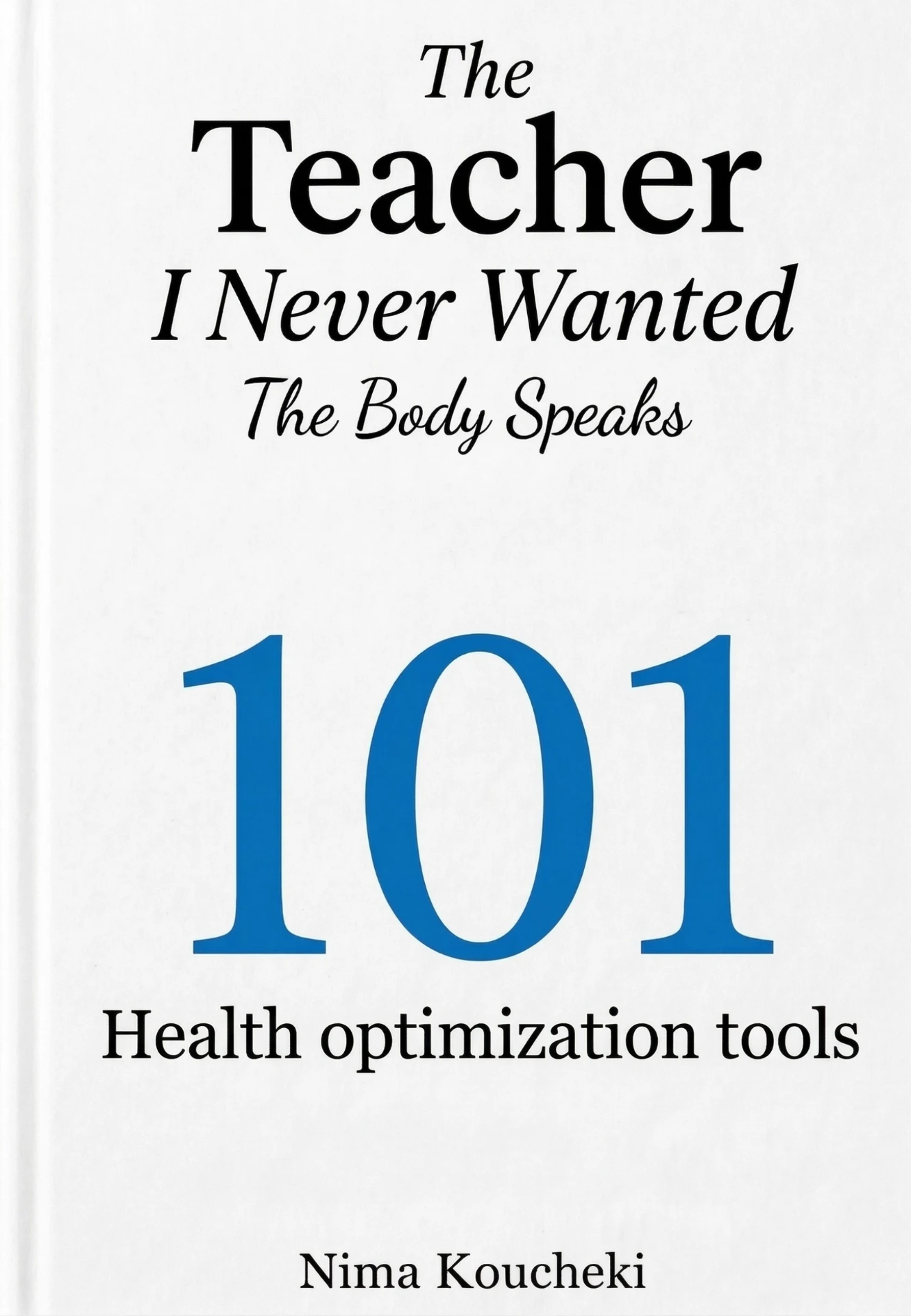
Thirteen years later I have collected 101 tools for understanding the human body. I now run Get Body Data in Amsterdam, doing the same kind of testing for other people, and I write and speak about what I learned along the way. I still live with Crohn's disease. I just know a lot more about my own body than I did that Saturday in Naples.